The Rise of “Personal Agents” Triggers Major AI Platform Bans

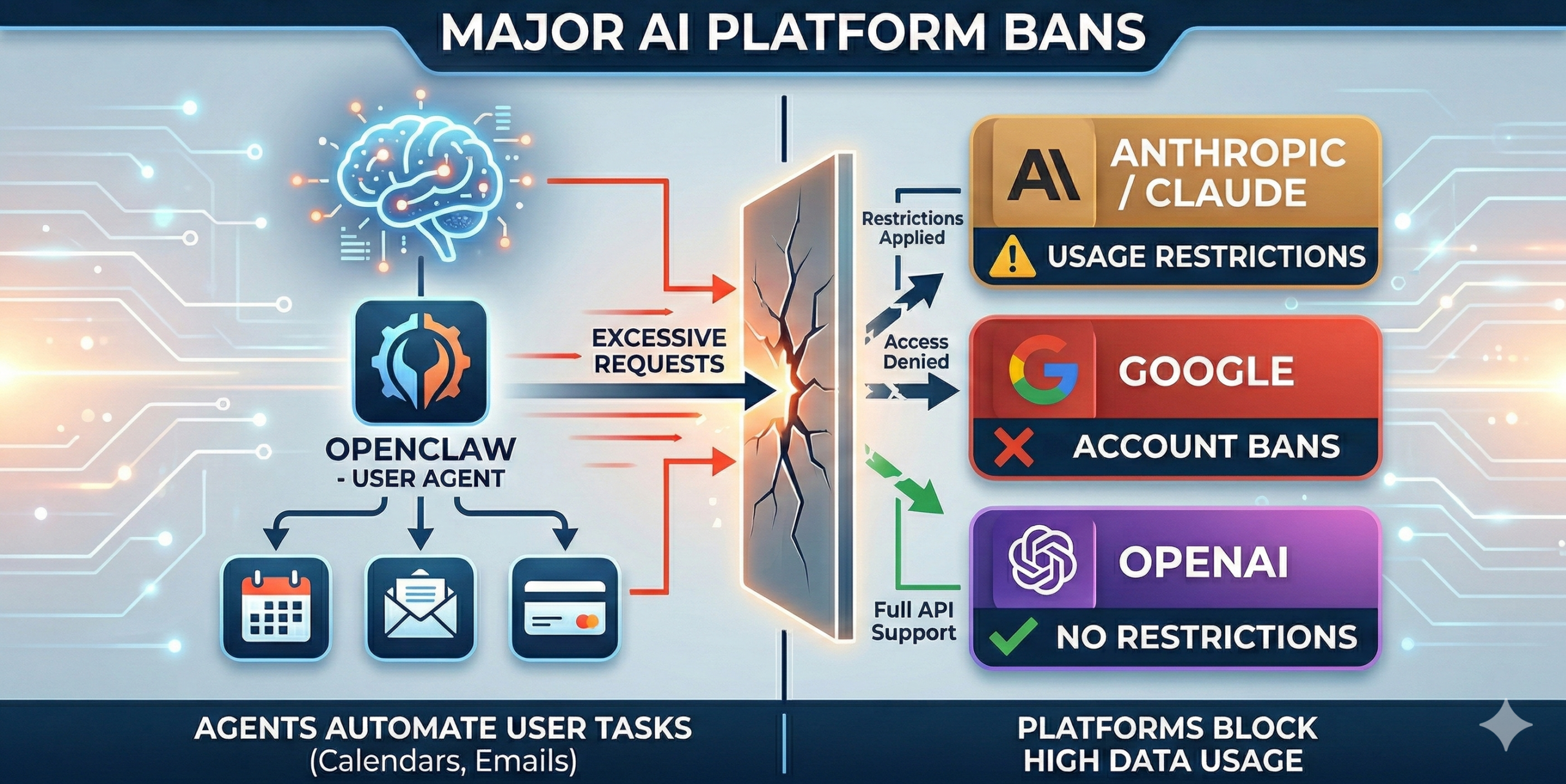
OpenClaw has rapidly become a major talking point in the AI industry, including here in East Tennessee. Created by Austrian developer Peter Steinberger, OpenClaw is an open-source “agentic” platform. Unlike a standard chatbot that just answers questions, OpenClaw is designed to be a “personal agent” that runs locally on your own computer. It can autonomously manage your calendar, send emails, and browse the web, acting as a digital assistant that works 24/7.
The platform’s viral success in just one month has led to a fractured response from big tech companies. Google and Anthropic (the makers of Claude) have begun restricting or banning users who link their flat-rate consumer accounts to OpenClaw. These companies cite “excessive data usage” and service degradation as the primary reasons, noting that the tool can consume millions of AI “tokens” (units of data) in a single afternoon. In contrast, OpenAI has taken a different path, “acqui-hiring” OpenClaw’s creator to lead their own personal agent efforts and promising to support the project via an open-source foundation.
While the tool offers high levels of privacy by running on a user’s own hardware, it has also drawn fire from cybersecurity experts. Recent reports have identified thousands of exposed OpenClaw instances on the public internet and “supply chain attacks” where malicious plugins were uploaded to its marketplace. This inconsistent landscape of bans and security risks highlights the growing pains of moving from simple chatbots to autonomous AI agents that can take real-world actions.
Why this matters for The Knoxville AI Hub
This development is a vital lesson for Knoxville area residents and businesses on the volatility of the AI landscape. For small businesses and startups, it serves as a warning against over-reliance on a single AI provider, as a sudden ban or change in terms of service could disrupt operations overnight. Educators and parents should note that while “personal agents” like OpenClaw offer incredible productivity, they also require a high level of technical literacy to manage safely. For seniors and lifelong learners, it is a reminder to be cautious with unverified open-source tools that ask for broad access to personal email or financial accounts.
For more detailed information, you can read the full story here: https://www.pcworld.com/article/3068842/whats-behind-the-openclaw-ban-wave.html